

A new home design innovation is giving Plantation Homes customers more choice when building in flood prone areas. The elevated sub-floor system can be applied to any of our existing home designs, offering a practical, compliant solution for people looking to build on land with higher flood risk.
With recent extreme weather and flooding events across South East Queensland, the need for flood resilient homes has never been greater. A flood-resilient design reduces repair costs, speeds up recovery and provides peace of mind knowing your home is better prepared for a natural disaster or flood event.
With insurance premiums for flood prone properties at an all-time high, building a home that minimises flood risk can improve insurability and help lower premiums.
The growing need for flood resilient homes
Mark Hampshire, Plantation Homes Operations Manager explains that the increased frequency and intensity of recent flood events in South East Queensland and recent changes to council flood mapping which highlights a wider area impacted by flood waters meant more people were seeking flood resilient homes.
"We recognised the growing need for housing solutions in flood affected areas, particularly on the Gold Coast," Mark says. "Many people wanting to build a new home struggle with flood design requirements as some home designs aren't able to be adapted to comply with building standards.
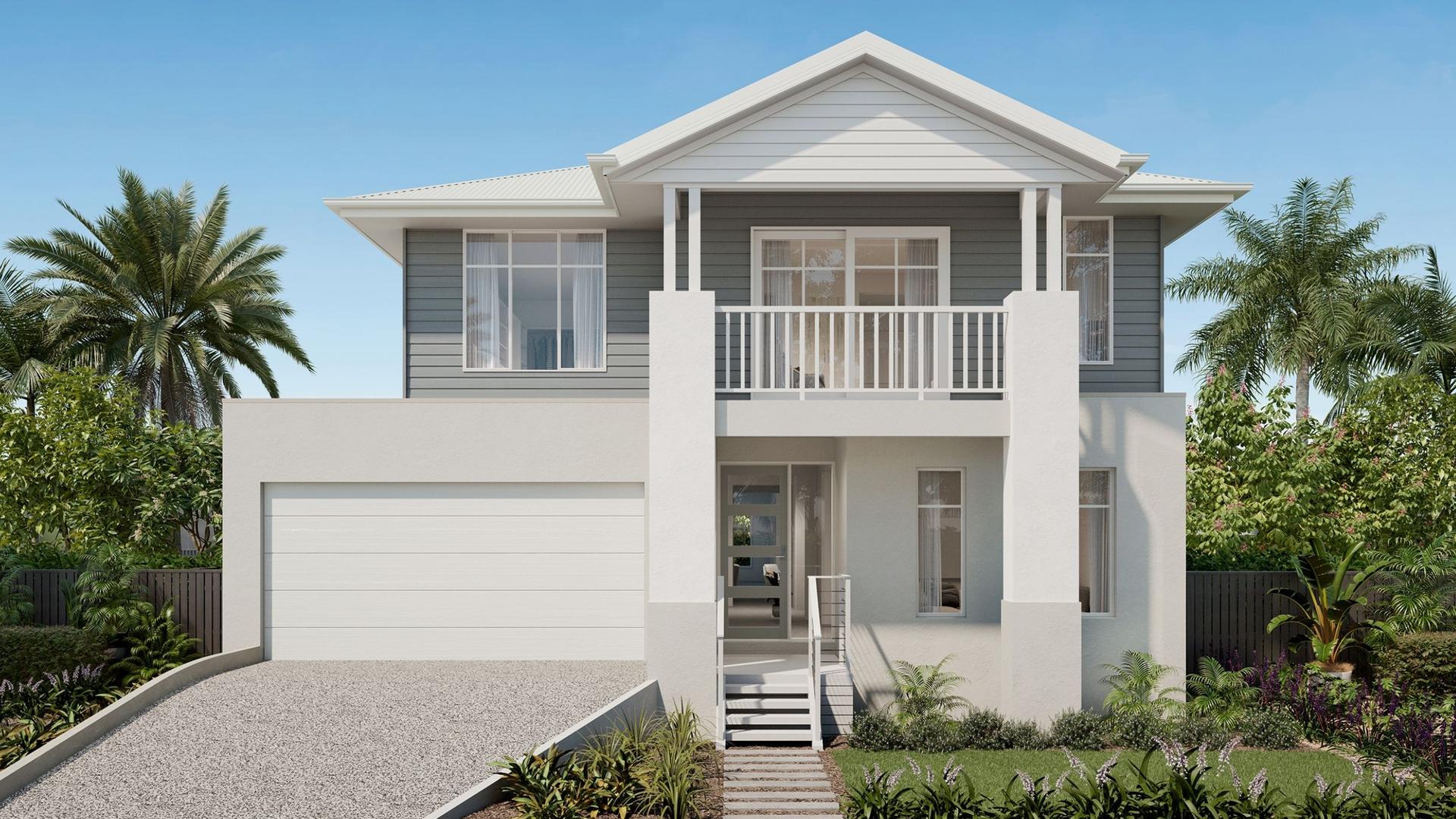
Raised timber sub-floor for greater flood protection
Unlike standard slab-on-ground construction, our flood resilient homes feature a raised timber bearer and joist sub-floor positioned 900mm above the natural ground level.
This elevated system reduces the risk of flood damage by lifting the home off the ground, offering greater protection compared to a traditional slab design. Mark said that the open space beneath the structure promoted airflow, prevented moisture buildup and accelerated drying after flood events.
"By introducing a timber sub-floor construction method, we’re providing a practical and compliant solution that allows more customers to build on flood-affected land while maintaining the quality and liveability of their home."
Designed to meet flood storage requirements, the sub-floor system ensures that main living areas remain safely above potential flood levels. 'Flood storage' refers to the ability of the space below a raised home to temporarily hold flood waters, helping to manage water flows and minimise damage. It's a key requirement of building in flood prone areas. The flooring system is only able to cater for flood storage, not overland flow.
The garage remains on a traditional slab with easy access via an internal connection and external timber stairs leading to the laundry.
"Our sub-floor system can be applied to any of our home designs, offering exceptional design flexibility," says Mark. "It can also be combined with additional solutions to help safeguard the home. Our team, and if required, a hydraulic engineer can assess site conditions, recommend tailored flood-resilient features and ensure compliance with local regulations."
Additional solutions for building on flood-affected lots
Along with the raised sub-floor system, Plantation Homes has several solutions for building on lots affected by flood hazard overlays. In some cases multiple building methods are combined to achieve a solution.
- Importing fill: Raising the building site by adding compacted fill helps to elevate the home, directing flood waters away from the structure and preventing water pooling.
- Building retaining walls: Retaining walls help manage water flow, improve drainage, prevent soil erosion and protect the home's foundation.
- Drop edge beams: These allow a home to be built on a raised slab while reducing the need for excessive cut and fill on sloping land. They create a level platform for construction while keeping the home raised above potential floodwaters.
Flood resilient vs flood proof homes
Throughout this article, we refer to flood resilient homes—homes designed to minimise damage and recover quickly after a flood. While water may enter during a flood event, the design ensures minimal damage, easier clean-up and reduced structural impact.
Flood proof house designs or flood resistant houses, on the other hand, are built to completely prevent water entry, using sealed walls, flood barriers and watertight construction. Due to the high cost and complexity this approach is more common for commercial construction or critical infrastructure rather than homes.
In Australia, homes in flood prone areas tend to focus on flood resilience because it's most practical, cost effective and achievable solution.
Building codes and regulations for homes in flood hazard areas
In Queensland, construction in flood hazard areas must comply with local planning laws, state development codes and national construction standards.
- Local Council flood hazard planning schemes. Each local council has a Planning Scheme that outlines minimum finished floor levels, flood storage rules, building setbacks and site-specific engineering requirements.
- Queensland Development Code (QDC). Provides state-wide standards for minimum floor heights, structural reinforcements and use of flood resilient materials.
- NCC (National Construction Code). The NCC sets the Australian standards for safe and resilient building designs. Under the NCC, homes in flood zones must withstand the pressure and movement of floodwaters, use water-resistant construction materials, have elevated floor systems and protect essential services like electrical and plumbing systems from water damage.

Council regulations and flood overlays
Local authorities use flood modelling and historical data to determine flood risk and identify vulnerable areas. These areas are displayed as a layer on a map, called a 'flood overlay', where different colours or shading indicates different levels of flood risk.
Across Brisbane, the Gold Coast and the Sunshine Coast, flood overlays influence:
- Land use decisions
- Building heights
- Finished floor levels
- Drainage requirements
- Flood storage requirements
- Construction materials and building standards.
Understanding flood overlay terms
There are three key terms you may come across while reviewing flood overlay information:
- Defined flood level (DFL): The estimated height of a major flood event based on historical data and flood modelling. DFL reflects predicted water levels during extreme weather events.
- Freeboard: An additional safety margin (such as 300–500mm) above the DFL to account for uncertainties in flood predictions.
- Finished floor levels (FFL): The highest surface of the finished floor without any coverings. In a flood zone, building regulations generally require that the finished lower floor level be raised above the DFL.
Gold Coast flood overlays
The Gold Coast Council Flood Overlay Code requires the floors of habitable rooms (such as bedrooms and living rooms) to be at least 300 millimetres above the defined flood level to minimise flood risk.
For property owners, the council provides:
- Flood search reports: Offering detailed flood risk assessments, including estimated defined flood level for individual properties.
- Flood insurance maps: Gives homeowners additional information to understand their flood risk and discuss a suitable flood insurance policies with insurers.
Brisbane flood overlays
The Brisbane Flood Overlay Code guides the future development of sites at risk of flooding. The city has five defined Flood Planning Areas based on the likelihood and severity of flooding.
For complex sites or high-risk flood areas, a Registered Hydraulic Engineer must conduct a site specific technical assessment that includes floodwater storage requirements, drainage design solutions and compliance with council regulations.
Building with Plantation Homes in a flood hazard area
Building a flood-resilient home with Plantation Homes ensures your new home meets requirements while maintaining our exceptional quality and design standards. However, additional considerations apply when building in a flood overlay zone.
- Initial site investigation: At the sales stage our team will conduct preliminary property searches to assess any flood requirements. This may include a trial siting and assessment by our hydraulic engineer.
- Deposit and site assessments: An $8,000 deposit covers a contour survey, initial drawings flood study, and preliminary energy assessment. This deposit is refundable for the first 30 days, subject to terms.
- Design and approval: Once compliance is confirmed, we finalise structural upgrades, drafting and sales quotations before proceeding.
- Slab height certification: Once the slab is constructed we obtain a slab height certification to confirm the home meets the minimum finished floor level requirements.
“As long as the selected design, including the façade, modifications and required setbacks meets compliance standards, our flood-resilient design can be adapted to suit any block—regardless of its orientation," says Mark.
However, there may still be situations where a flood resilient solution isn't viable for certain lots.
Long term protection and peace of mind
Building a flood-resilient home not only ensures compliance with local regulations but also provides long-term protection and peace of mind in flood-prone areas.
By working with Plantation Homes, our experienced team can help navigate flood requirements, explore suitable design options and ensure your home is built to withstand potential flooding—without compromising on style or liveability.
To find out more about our flood resilient home designs, talk to one of our Sales Consultants or visit a Display Home location.


