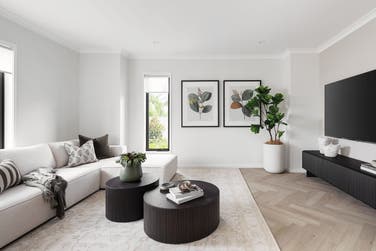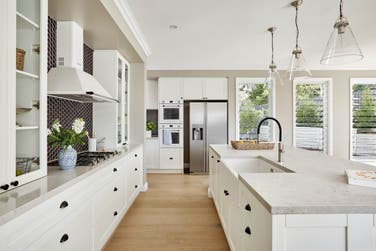

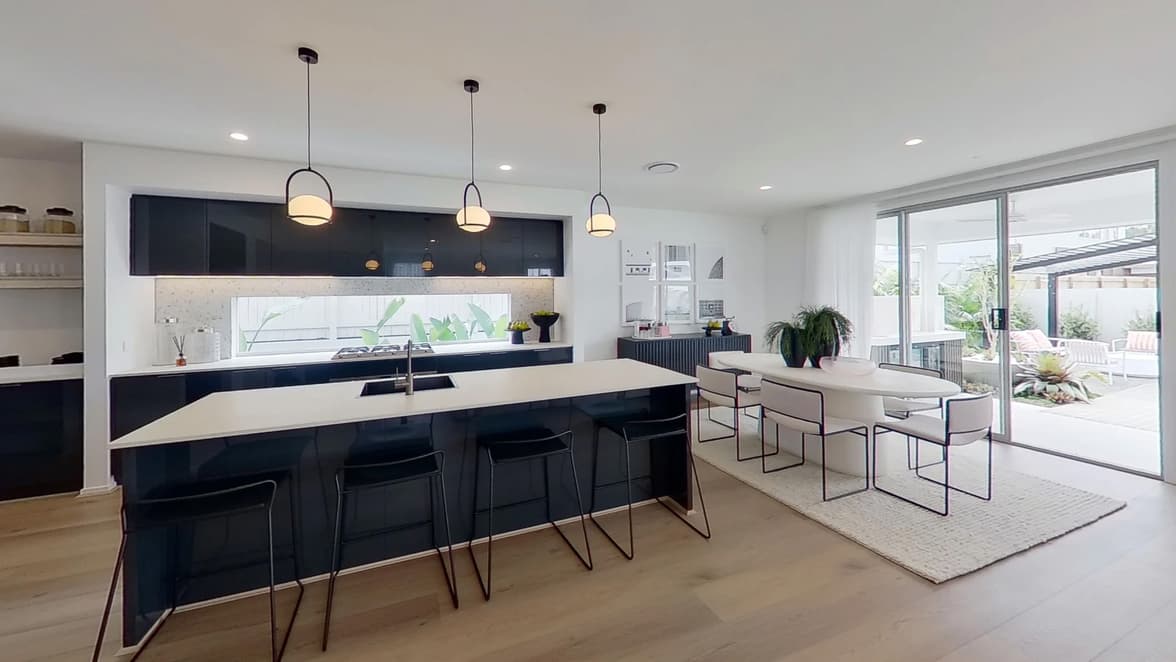
Open floor plans have long been a hallmark of modern Australian homes. Having started as an architectural trend, they soon blossomed into a mainstay in house designs that continues to gain popularity. It's called a “great room” for good reason—a shared space that brings families, friends, and guests together.
Blending cooking, dining and living into one shared zone, open plan houses work for everything from breakfast with the kids to weekend entertaining. Spaces aren't just for one purpose anymore. They're about connection, flexibility and lifestyle.
What is an open floor plan?
An open floor plan, or home plan, combines two or more communal rooms by removing the walls between them and forming a larger shared space within the home. The most common combination for an open floor plan is the *great room,* which joins the living room, dining area and kitchen all together.
Open plan living changed the way we see the kitchen. It's no longer tucked away as a purely practical space. In older homes, kitchens were usually hidden at the back of the house, out of sight and certainly out of bounds for guests. Now, the kitchen is a central hub, designed to bring people together rather than keep them out.
As our lifestyles became more relaxed and less formal, the way we use our homes began to shift. Families grew, lot sizes shrank and rooms started doing double — or triple — duty. Homeowners are looking for smarter, more flexible spaces that can keep up. Open plan living floor plans respond to that need. Dining tables might host dinner one minute and double as a workspace or crafts station the next. The lines between spaces have blurred and the idea of separate spaces feels less necessary.

What makes an open plan living floor design great?
The advantages of adopting an open layout centre around people and their movement within the home.
Easy traffic flow
Open plans allow people to move around freely. Without walls and doors to break up the traffic flow at home, you can create an illusion of a larger space that's easy to move around in. If you follow Feng Shui principles, remember to keep your home clutter-free to invite positive energy and let it flow within your home.
Family-friendly
An open plan layout keeps everyone connected, yet free to do their own thing. A winner for families, parents can meal prep or catch up on emails while keeping an eye on the kids as they play. Instead of being cooped up in individual rooms, open plan rooms invite members of the family to come together and spend some time with each other.
Good for entertaining guests
One of the biggest benefits of open concept kitchen living room floor plans is the way they allow conversation. They are social and great for having guests over. The layout is akin to an invisible guide that helps them move around; they will still be within arm's reach — even when you're still busy in the kitchen!
Allow as much natural light as possible
Open plan kitchen, living, dining floor plans allow light to travel freely through the home, bouncing off surfaces and filling every corner. An abundance of natural light can make your home feel brighter and larger. Having walls can block the sunlight coming into your house or contain it in certain areas. It can also obstruct air circulation within the home. Open floor plan house plans present a straightforward solution: an improved distribution of sunlight and promotion of airflow.
Spaces that serve multiple purposes
Open floor plans are easy to adapt. They are designed for real life. The lack of partitions makes it easy to move furniture and appliances around. One zone can serve as a play area, home office or spot to unwind, all depending on the time of the day. You can also easily convert certain areas to a specific room type according to need (e.g., family room, entertainment area, etc).
Improved resale value
Open plans exude modern-day living, so it's no surprise that they're highly sought-after amongst homebuyers. They suit everything from contemporary styles to more organic, cosy interiors. This gives your home an advantage when it comes to a resale should you sell it down the line.

Are there any downsides?
Of course, open plan living isn't perfect for everyone. But the benefits far outweigh the trade-offs and smart design choices can help overcome the following challenges.
Heating and cooling
Because of a larger communal area, heating and cooling the entire space (instead of separating them into rooms) may turn out to be more expensive. If you're looking for budget-friendly ways of adopting this layout, maximise your use of natural light and thermal insulation to lessen your reliance on heating and cooling systems. All of our house designs reach 7 star energy efficiency which means that heating and cooling are considered as part of the design.
Noise
Noise is an inevitable downside to open plans without individual rooms. If everyone is in the great room at the same time, getting some peace and quiet might be challenging. You're better off spending your *me-time* elsewhere in the house!
Harder to hide mess
In an open plan house, everything's on display — the half-finished homework on the dining table or the shoes kicked off at the door. Smart storage becomes essential if you want your space to stay clutter-free.
Privacy
The absence of partition walls won't help with privacy either. If you find yourself in a work-from-home setting, an open layout may not be conducive to productivity.

The biggest differences between a closed layout and an open plan space
The way your space flows is key. And when it comes to house design, one of the biggest choices you'll make is whether to go with an open plan layout or stick with a more traditional, closed-off design. Understanding how they differ can help you figure out what suits your lifestyle best.
Unlike closed layouts, with separate rooms with walls and doors, open plan spaces combine living areas into one generous space. It's a layout that reflects how we live today — more connected, casual and flexible.
Open plan living ideas: How to select your floorplan
Open plan living spaces let you create a space that works beautifully. The layout of your open plan house can make a big difference to how your day-to-day life flows.

What's the best shape for open plan living spaces?
Open plan spaces come in all shapes and sizes — and the best layout depends on how you live. Some popular configurations include:
- L-shaped layouts naturally separate kitchen and living areas, creating clear zones while keeping things open.
- Rectangular or long open plan kitchen living room floor plans are ideal for narrow blocks, offering a clean line of sight from one end of the home to the other.
- U-shaped living zones are great for creating flow around a focal point, whether that be an island bench or dining table.
Each shape has its strengths. The right one will make everyday life easier, whether you want to keep an eye on the kids while doing chores or create a space to entertain without feeling cramped.
Define zones without adding walls
Open plan house designs don't have to mean everything blurs together. In fact, a good layout uses subtle tools to give each zone its own identity and get more from your floor space without closing anything in.
- A statement island or bench anchors the kitchen and provides a natural gathering spot.
- Furniture placement can create clear lounge areas without blocking flow. To separate the living space, for instance, arrange two sofas around a central rug, with one facing the kitchen to create a subtle divide.
- Pendant lighting, open shelves or a feature wall add visually appealing aspects while signalling a shift in function from one zone to the next.
The trick is to create separation without losing that sense of spaciousness that makes open plan living so appealing.

Simple design tips for open plan living
Maximise your open plan layout with these effective ideas:
- Dining near the kitchen: Keep your dining table close to the kitchen for convenience, and near patio doors for easy outdoor access.
- Home office spot: Position your desk near the kitchen for easy breaks and natural light, but keep it away from distractions like the TV — for your own good!
- Go modular: Invest in furniture on wheels for flexibility. Move it around when you fancy a change or need more space for entertaining.
- Use curves: Round tables, foot stools, rugs and side tables break up harsh angles and add flow to a rectangular open plan room.
- Highlight views: Position key areas like the living room and dining table to take in the best views your home has to offer. No back-to-the-window seating!
What's the verdict?
If you're after a modern-style interior that's bright, spacious and inviting, an open floor plan might be the one for you. The open concept isn't just a floor plan, it's also a way of living that instils a sense of togetherness in each member of the household. It isn't called open plan living for no reason!
Need open plan inspiration? Choose from our home designs and find yours today.
Find a display near you.